


What are the Cracking Pressures for SVC/SHC Sanitary Check Valves?
Need to know the cracking pressures available for our springless sanitary check valves
We were recently asked what cracking pressures are available with our SVC/SHC springless sanitary check valves and if they are designed for gases.
Well, yes they are, they’re designed for both gases and liquid applications.
As per our datasheet, the cracking pressures for SVC/SHC sanitary check valves by disk type are as follows.
| Disk Type | Cracking Pressure |
| Polymer Disk (Teflon or PEEK) | 2.76 millibar (~0.4 psid) |
| 316 Solid Disk / 316 Disk with EPDM Soft Seal | 8.96 millibar (~0.13 psid) |
Note that we don’t list a cracking pressure for check valve with a polypropylene disk. It actually would be about the same as the polymer disk but we don’t list it because that particular disk is only used in liquid down-flow applications. So that disk is open at all times and the only time it will close is if the water raises in the drain causing the buoyant disc to rise into the seat and close off.
So as long as you have a water based liquid for the SVC down flow application, you will be fine.
The cracking pressures mentioned above apply specifically to our check valves designed for sanitary applications such as biopharmaceutical industries. Now, let’s understand what cracking pressure is in general and why it matter.
What is Check Valve Cracking Pressure?
Cracking pressure for a check valve is the minimum upstream pressure required to slightly open the valve and allow flow to begin. Below this pressure, the check valve remains closed, preventing any reverse or forward flow depending on the design.
Cracking pressure isn’t the same for every check valve; it depends on how the valve is designed. It’s usually measured in units like psi or psig, or in metric terms such as bar or kPa.
Why Does Cracking Pressure Matter?
Cracking pressure in check valve matters because selecting the wrong value can significantly affect how well a check valve performs in the required application. If the cracking pressure is too high or too low, it can lead to,
- Too high:A high cracking pressure increases the pressure drop across the check valve. If it’s set too high, the valve may fail to open completely or may not open at all. When the valve doesn’t remain fully open during normal flow, it can start to chatter, leading to early wear and reduced service life.
- Too low: A low cracking pressure can slow down how quickly the valve closes. If it’s set too low, the valve may also struggle to close completely in vertical downward flow, as the weight of the stem and disc can overcome the spring’s opposing force.
Watch the video to learn more.
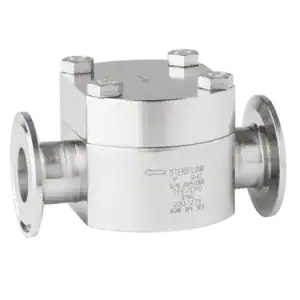 SHC Series
 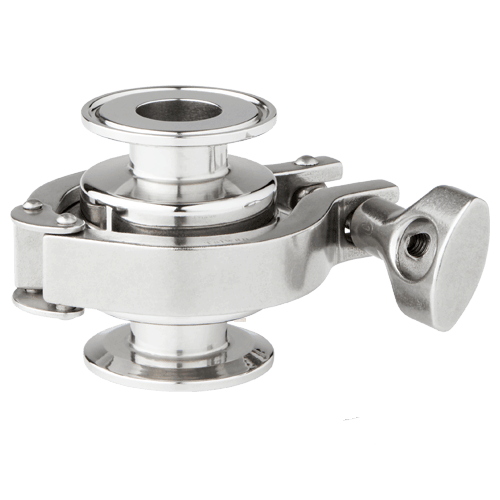 SVC Series – Down-Flow (Liquids only)